
Let's talk Breasts
Breast Cancer
Overview
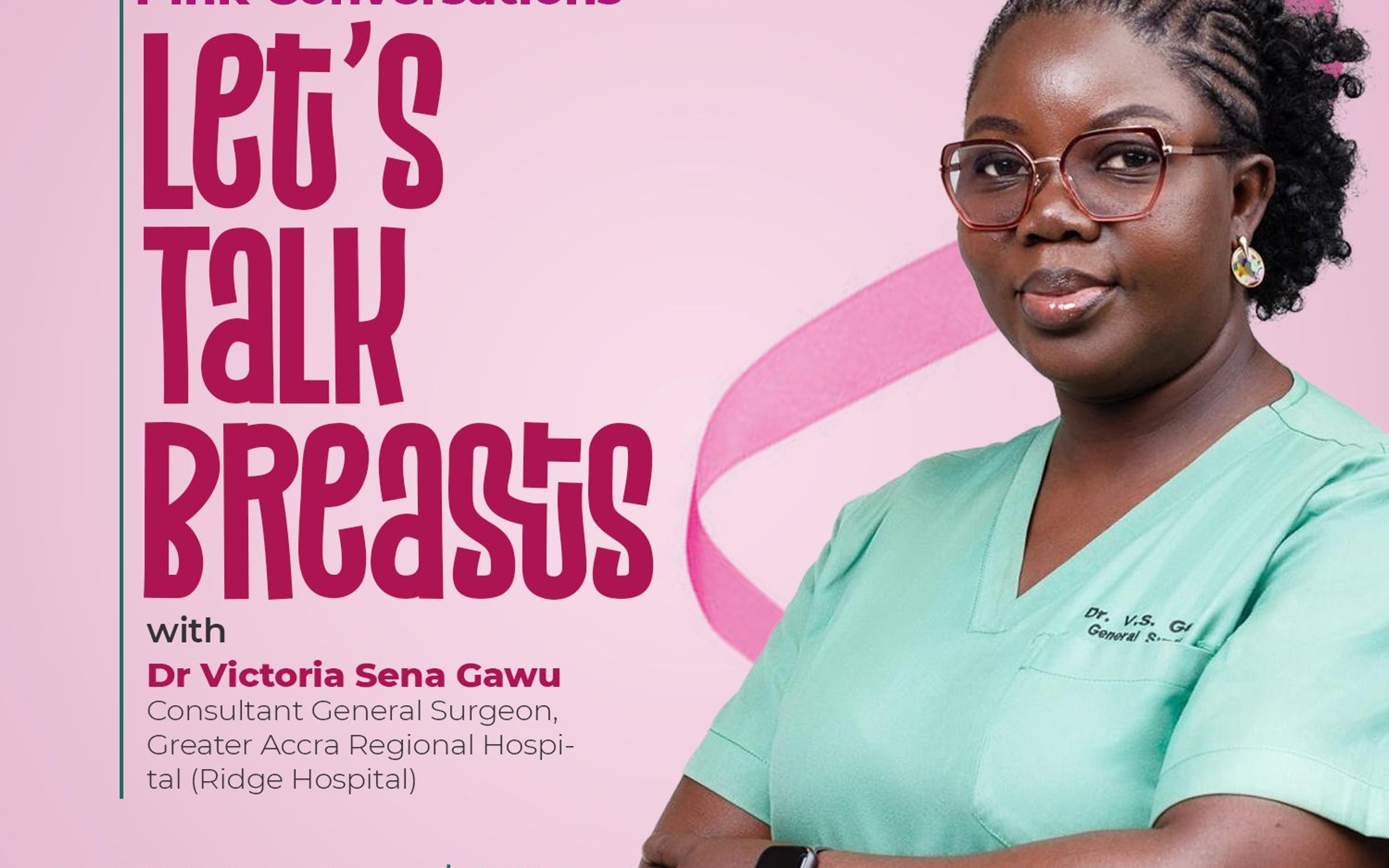
October is Breast Cancer Awareness Month, and on Sunday 18 October GSU-Japan went pink. Members and friends met on Zoom for “Let's talk Breasts”, an open conversation about breast cancer with Dr. Victoria Sena Gawu, a consultant general surgeon at the Greater Accra Regional Hospital (Ridge Hospital) in Ghana, who joined from Accra early in the morning.
Her talk covered the risks, the warning signs, how breast cancer is found and treated, and why finding it early matters. GSU-Japan President Dr. Floret Maame Owusu, dressed in pink for the occasion, followed with practical advice on breast screening in Japan, and the session closed with a long round of questions.
Speaker
Dr. Victoria Sena Gawu
Consultant General Surgeon, Greater Accra Regional Hospital (Ridge Hospital), Ghana
Highlights
The most common cancer in women
Dr. Gawu explained that breast cancer is the most common cancer among women worldwide and a leading cause of cancer deaths. In Ghana, she said, there are about 4,000 new cases and about 2,000 deaths every year.
Who is at risk
Some risk factors cannot be changed: increasing age, a family history of breast cancer, starting periods early, reaching menopause late, and never having given birth. Others can: smoking, alcohol, a diet high in fat and cholesterol, and long-term use of hormonal treatments such as the contraceptive pill. Healthy eating and exercise lower the risk.
Signs to look out for
The most common sign is a painless lump. Others are changes in the skin of the breast, including skin that looks like orange peel (“peau d'orange”), and discharge from the nipple. If breast cancer spreads, it can reach the lungs, bones, liver and brain.
How it is found and treated
Diagnosis starts with a conversation and an examination, then imaging: an ultrasound for younger women and a mammogram for older women. A biopsy confirms the diagnosis. In Ghana, a multidisciplinary team then agrees on treatment according to the stage of the cancer, which can include surgery, chemotherapy and radiotherapy. Dr. Gawu stressed that treatment is a long journey with several steps and needs patience.
She explained that removing only the lump (wide local excision) must be followed by radiotherapy, which is still hard for many women in Ghana to reach. Breast reconstruction is possible, either during the same operation or later.
Early detection saves lives
Her strongest message was to find it early. Breast cancer found at an early stage has a five-year survival rate of about 99%, she said, compared with about 50 to 55% when it is found late. She encouraged everyone to examine their breasts every month, and women over 40 to have a mammogram every year. In Ghana, the Pink October campaign has helped more women come forward early.
Screening in Japan
Dr. Floret Maame Owusu then explained how breast screening works for people living in Japan: how to use the screenings that local city and ward offices subsidise, the recommended ages, and how to find a specialised breast clinic if you notice a lump.
Questions and answers
Participants asked many questions. Among the answers:
- Most breast cancer medicines, including Herceptin, are covered by Ghana's National Health Insurance.
- Reconstruction using the patient's own tissue is covered by insurance; reconstruction with implants is paid privately. A reconstructed breast cannot breastfeed.
- Men can get breast cancer too. Men with a strong family history should also check themselves every month.
- Any breast lump, however small, needs to be seen by a doctor.
- There is no evidence that intimacy causes or prevents breast cancer. A partner cannot prevent cancer but can help notice changes.
- In Ghana, breast clinics with surgeons, breast care nurses and clinical psychologists support patients and survivors, and connect them with other survivors.
Gallery
Partners & sponsors

Outcomes & next steps
Dr. Gawu offered to keep helping members in Japan with questions about breast lumps. One participant suggested a similar session for Ghanaian women in Japan who are not students, in a Ghanaian language, and Dr. Gawu agreed.
At the end, Floret announced the launch of GSU-Japan's new website, gsujapan.org, where members can follow upcoming events and community news. The session closed with a group photo and a friendly chat.
Acknowledgements
Medaase to Dr. Victoria Sena Gawu for giving her Sunday morning in Accra to teach us, to JAfriQ Radio for sponsoring the session, and to everyone who came and asked questions.